Shared Governance That Ignites Passion, Purpose, and Possibilities
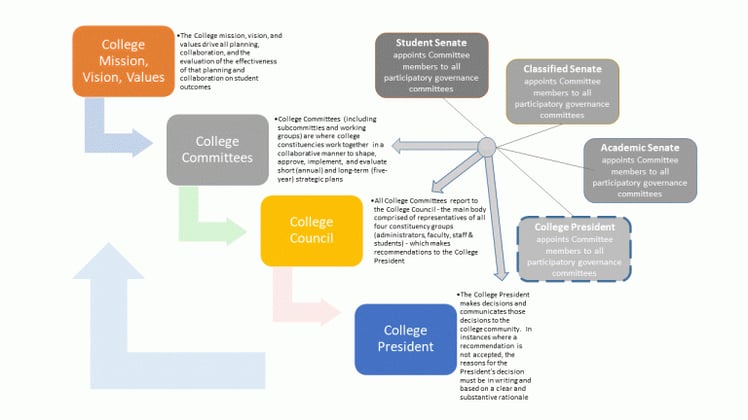
The purpose of shared governance is to foster a collaborative and inclusive decision-making process that engages students, faculty, classified professionals, and administrators in shaping the policies, priorities, and strategic direction of our district. By promoting shared governance, we aim to enhance transparency, accountability, and responsiveness to the needs of our diverse community. This model ensures that everyone has a voice in the governance of the district contributing their unique perspectives and expertise to advance our mission.
Key Objectives
• Inclusive Decision-Making: To create an environment where diverse voices are heard and valued, ensuring that decisions reflect the collective interests of the entire district community.
• Transparency and Accountability: To maintain open communication and clear processes that build trust and accountability among all members of the district community. • Responsiveness to Community Needs: To develop policies and initiatives that are responsive to the evolving needs of students, faculty, and staff, enhancing the overall educational experience
• Promotion of Academic Excellence: To support a culture of academic rigor and ongoing assessment, aligning governance practices with the district’s educational goals and standards.
• Equity and Inclusion: To advance equity and inclusion within the district, addressing systemic barriers and promoting diverse representation in governance structures.
• Sustainable Development: To ensure the long-term sustainability of the district by integrating strategic planning and resource management into governance practices.